
Three hands-on upcycles, including my paper-bag pattern hack, so forgotten pieces stop living in your donation pile.
Paper-bag patterning for a clean sleeveless shell
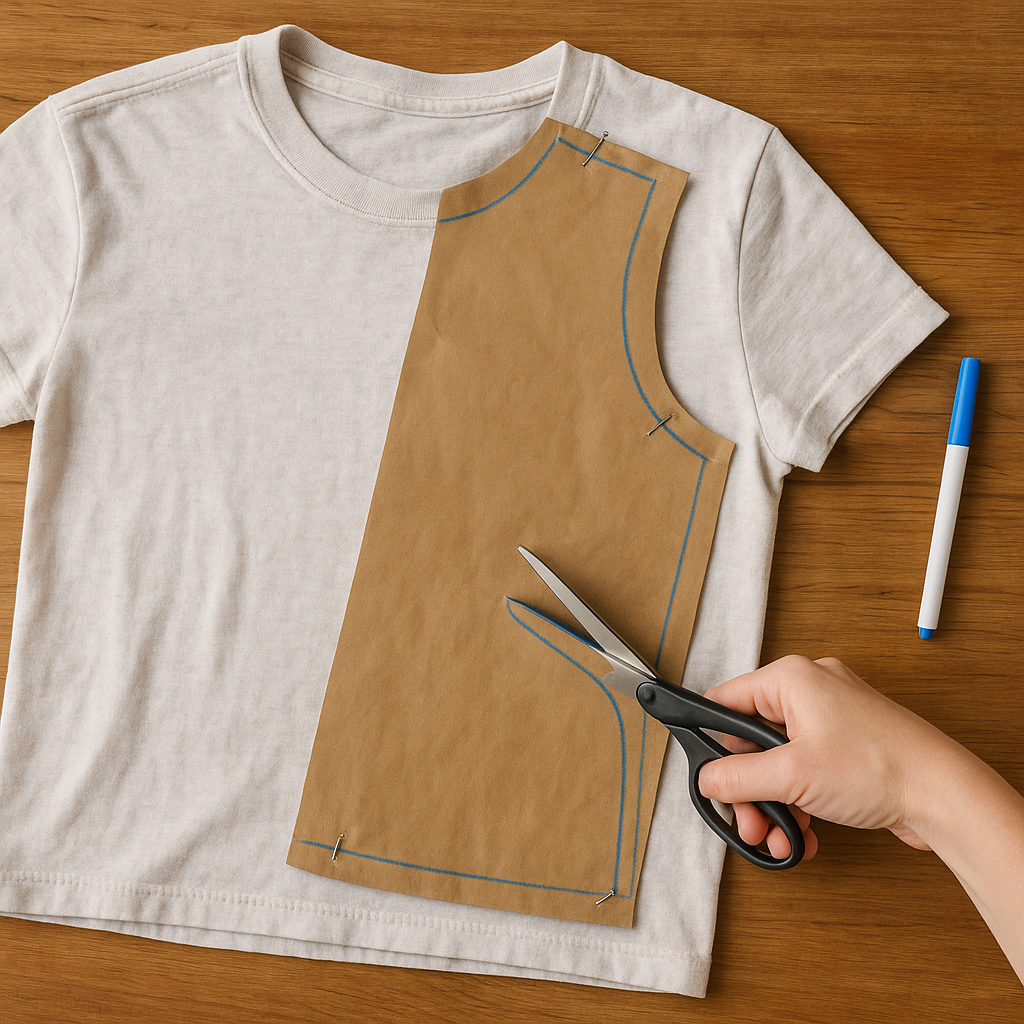
I keep coming back to this one because it turns a “I only wear this at home” T-shirt into a piece that slides into a simple outfit formula without looking like you made it during a late-night spiral. Grab the oldest tee you own that still has decent fabric (even if the hem is wavy and the collar is bacon). You also need a paper grocery bag, sharp fabric scissors, a washable marker or chalk, and a simple knit needle if you’re sewing. If you’re not, you can still do a no-sew version with fusible knit hem tape, but stitching holds up better when you toss it in the wash.
Lay the T-shirt flat and smooth it like you’re about to fold it for a drawer. Cut up the paper bag into a big flat sheet, then fold it in half. Now steal the shape from a tank you already love. Put that tank on top of the folded paper, trace the neckline and armhole, and add about 3/8 inch all the way around for seam allowance. Cut the paper. That paper piece is your pattern, and it doesn’t lie the way “I’ll just eyeball it” lies.
Pin or clip the paper pattern to your T-shirt (still folded) so the center fold matches the shirt’s center. Mark and cut. Try it on before you finish anything. If the armhole feels too open and you can see your bra in the mirror when you lift your arms, redraw the curve tighter on the paper and recut just a little. For finishing, my cleanest low-fuss option is a narrow zigzag stitch or a twin needle around the neckline and armholes after you fold the edge in 1/4 inch, then another 1/4 inch. Pressing matters here, even on knits. A cheap iron and a damp cloth beat finger pressin every time. When it’s done, it looks like a deliberate sleeveless shell you can layer under a blazer, tuck into high-rise jeans, or wear with a midi skirt and sneakers without apologizing for it.
The button-down becomes a drawstring camp shirt
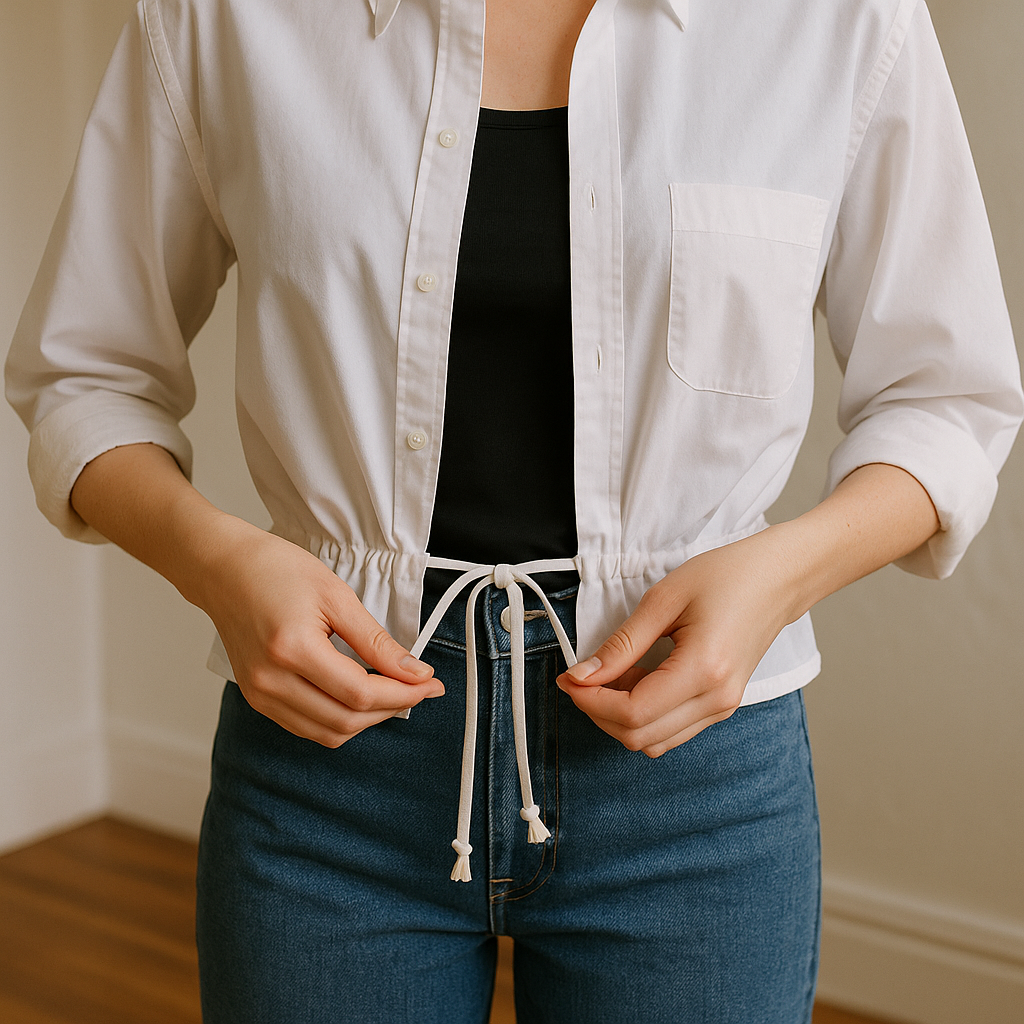
I had a white poplin button-down that was perfectly fine on paper and weird on my body. Too boxy untucked, too fussy tucked, and it did that thing where the front hem kicked out like it was trying to escape. I didn’t need a new shirt. I needed adjustability. This is the upcycle that made it a repeat player in my rotation, especially in the open over a tank + straight jeans + loafer lane.
Start with any button-down that’s not precious. Poplin, oxford, chambray, even linen. You need a seam ripper, matching thread, a safety pin, and either a flat cotton twill tape or a shoelace-like drawstring (nothing stretchy; it turns into a wavy mess after a few wears). Put the shirt on and decide where you want it to sit when it’s at its shortest. For me, it’s usually right at the top of the hip bone so I can wear it open without it swallowing my legs.
Take it off. Mark that line across the front and back, then cut the shirt 1 inch below your mark so you have fabric to fold into a casing. Press up 1/2 inch, then another 1/2 inch to create a clean channel. Stitch close to the top fold, leaving two little openings at the side seams for the drawstring to exit. If you’re dealing with a curved hem, you’ll have to ease it as you fold, and that means pressing in tiny sections instead of trying to force it all at once.
Now the part that makes it look intentional: add two small buttonholes at the side seams (or hand-stitch neat little eyelets) so the drawstring doesn’t chew through the fabric. Thread the drawstring through with a safety pin, tie knots at the ends, and you’re done. Worn loose, it reads like a slightly cropped camp shirt. Cinched, it gives you shape without tucking gymnastics. It’s also the rare upcycle that plays nice with jackets: you can set the hem exactly where you want it so it doesn’t bunch under a trench or a denim jacket. If you want it even more polished, swap the drawstring for 1/4-inch cotton twill tape and let the ties hang a little. People will assume you bought it that way.
Denim to a wearable belt bag strap (and why I prefer it)
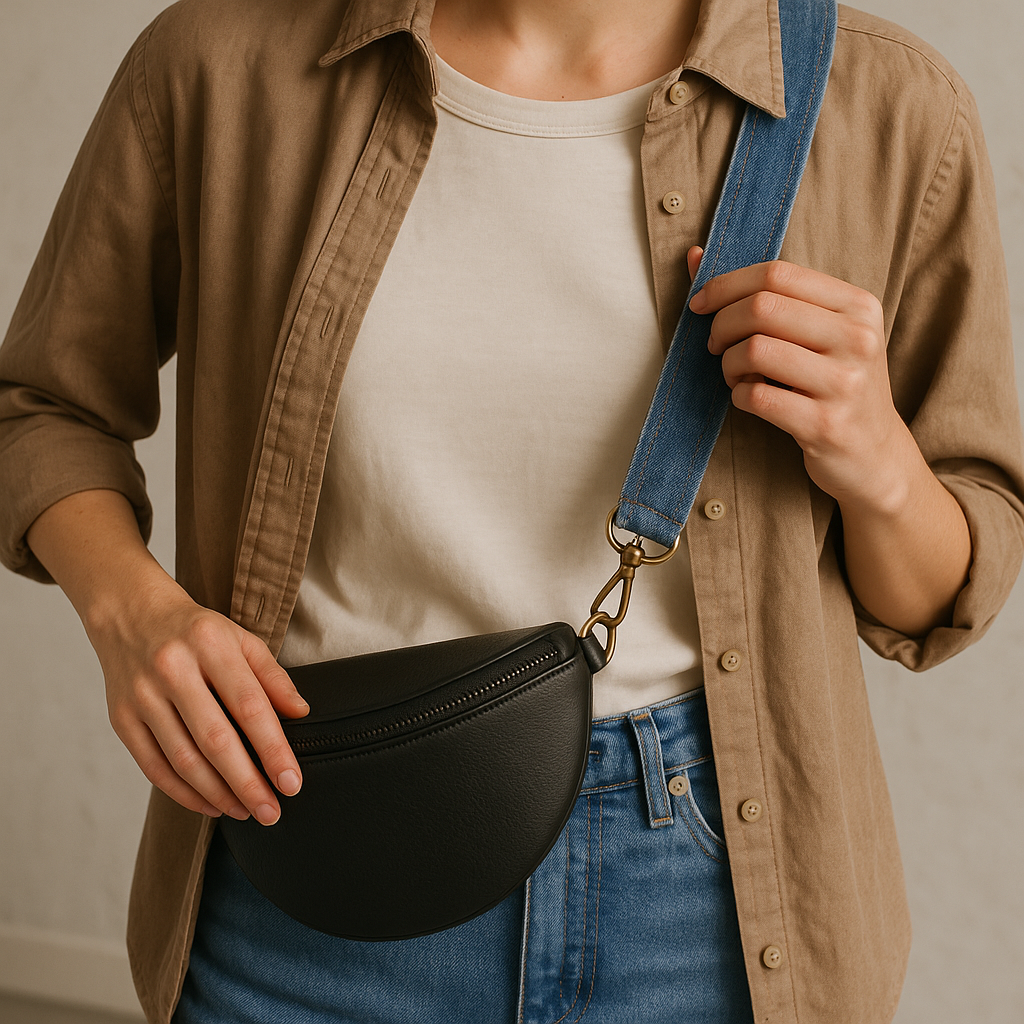
Most belt bags come with a strap that screams hardware stor. Black nylon webbing is fine, but it can look a little too sporty when I’m trying to land in that easy uniform zone: tee or tank, jeans or a slip skirt, and a third piece like an overshirt. I started making my own straps out of dead jeans, and now I do it whenever a pair rips in the inner thigh but the waistband and legs are still sturdy. It’s not a full bag-making project. It’s a swap that changes how a bag reads in an outfit.
Pick denim with some body. 100% cotton or a low-stretch blend works best because it doesn’t curl into a rope. Cut two strips along the grain, about 2 inches wide and as long as you can get. For most crossbody straps, 45 to 55 inches total length is comfortable, but measure your existing strap so you don’t guess wrong. Seam the strips together if needed: place right sides together, stitch, then press the seam open. Now fold the long strip in half lengthwise, press, open it up, fold each long edge into the center crease, press again, then fold back on the first crease. You’re basically making wide double-fold tape out of denim. Stitch down both long edges close to the fold.
Hardware is the only part you might have to buy, but it’s standard: two swivel hooks and one slider buckle in a finish that matches your bag (usually 1 inch wide). I like the kind sold for bag making because the edges are smoother than random craft-store rings. Thread one end through a swivel hook, fold it back about 1 1/2 inches, and stitch a sturdy box with an X through it. If your machine hates thickness, go slow and use a denim needle. Repeat for the other end, but feed the strap through the slider first so it adjusts like a normal crossbody. If you want extra durability, stitch a second line right next to the first where the strap folds back on itself. That’s the spot that takes all the pulling.
The fun part is styling, because the strap becomes part of the outfit formula instead of an afterthought. A faded medium wash strap looks good with white sneakers and a navy baseball cap. Black denim makes even a basic belt bag feel less like “I am running errands” and more like I planned this And if the strap ends up a hair too long, don’t trim it immediately. Wear it for a week, adjust it over a coat and over a tee, then decide. Denim has a way of settling into its job once you’ve lived with it.