From a $9 blazer swap to $12 loafers, these are the thrift-aisle moves that look sharp under office lights.
The blazer swap: size up for shoulders, then tame the waist
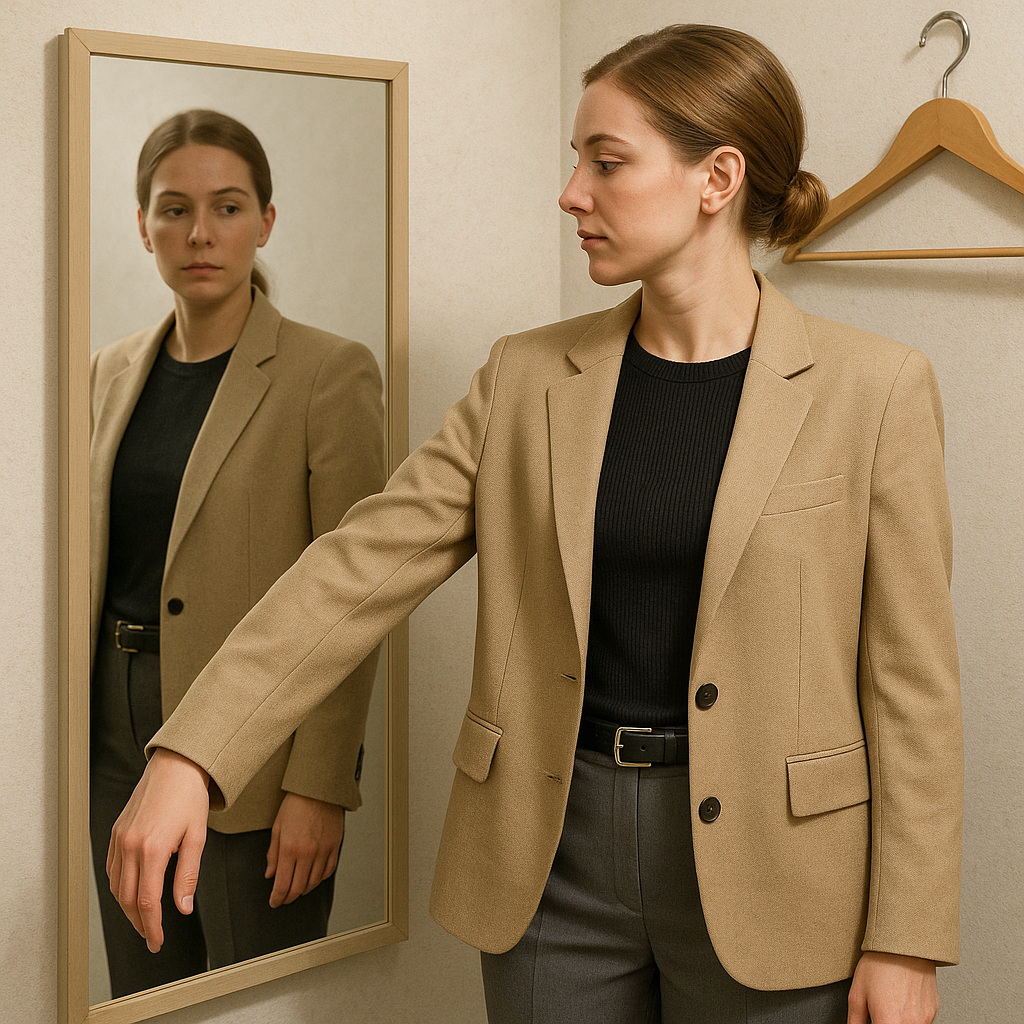
I have a little rule in the blazer aisle: I do not buy a blazer to “grow into” the shoulders. If the shoulder seam is drooping down your upper arm, no amount of wishful thinking makes it look intentional at work. So I shop the opposite direction. I size up until the shoulders sit where they should, then I control the rest with styling, not surgery.
Here is the try-on that saves me from 90 percent of bad buys: put the blazer on, lift both arms like you are grabbing a binder off the top shelf, then drop them. If the blazer rides up and stays up, it is too tight across the back. If it swings like a cape and the lapels keep folding weird, it is usually too big through the chest, even if the shoulders look fine. I also check the sleeve length by letting my arms hang. A tiny bit long is fine because it reads relaxed, but if it covers your knuckles it starts to look like you borrowed it from a taller coworker.
My favorite office combo from the resale rack is a slightly oversized blazer (think J.Crew, Banana Republic, Ann Taylor, Theory if you get lucky) over a fitted knit top and straight-leg trousers. The knit top is the secret because it removes the bulk that makes a thrifted blazer feel sloppy. I usually do a thin ribbed tee or a merino crewneck so the blazer can stay open without flaring. If the blazer is boxy, I add a belt on the trousers and keep the blazer unbuttoned, so the waist exists without me needing to alter anything. If the buttons pull when you close it, I treat it as an open-front layer and move on. Office lights are unforgiving. A strained button looks louder than a bright lipstick.
Two-pant formula: one pleated pair, one ankle pair
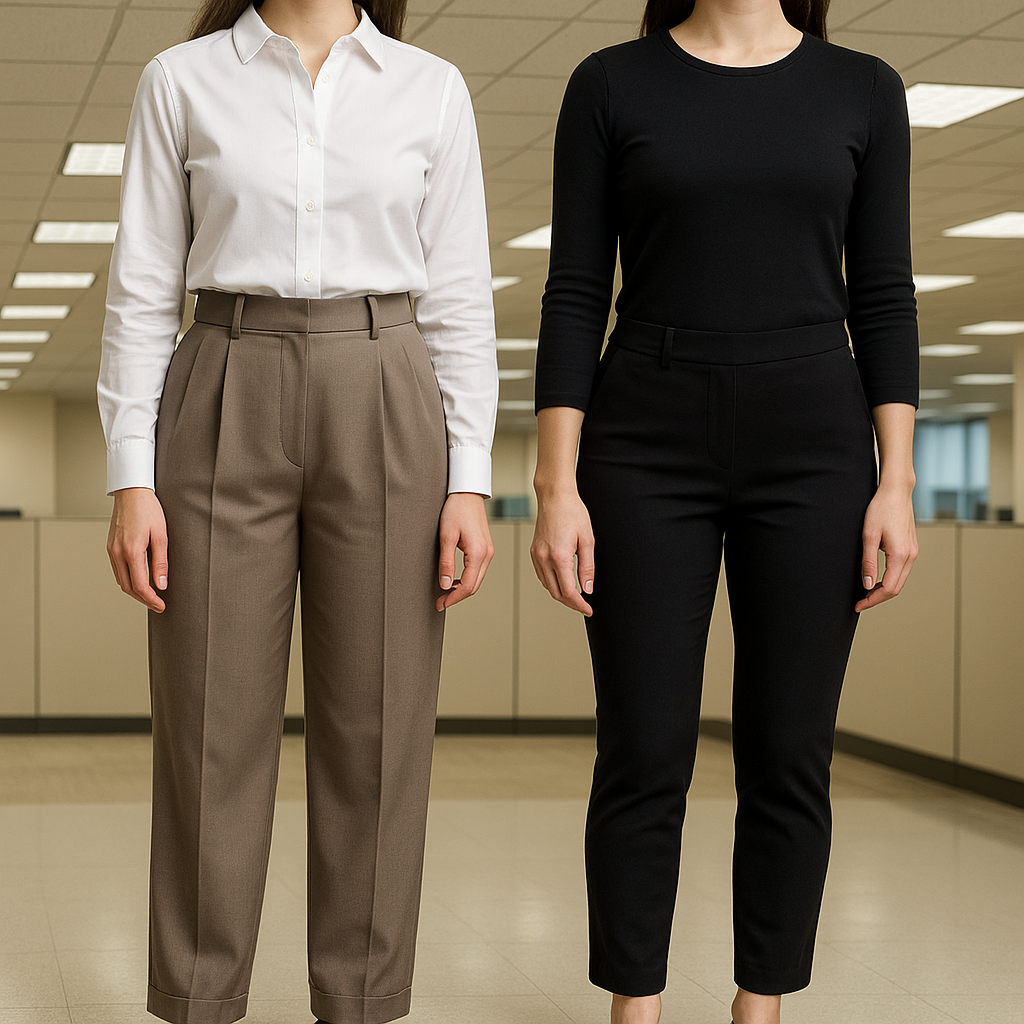
If you want resale office wear that looks consistent day to day, build around two pants silhouettes and stop trying to find the perfec pair that does everything. I learned this after buying three almost-right pairs that all failed in different ways: one bagged at the knees by 10 a.m., one had a shiny seat under fluorescent light, and one had pockets that ballooned out like little sails.
My two-pant formula is boring on purpose: (1) a pleated, fuller-leg trouser in a matte fabric, and (2) a slim straight or ankle pant that works with flats. The pleated pair gives you comfort on long meeting days and still looks sharp with a tucked-in shirt. The ankle pair is the reliable one for commuting, running to lunch, or days when you do not want fabric pooling on wet sidewalks.
In the thrift store, I start by touching fabric before I even look at size. I want something that feels like it has a little body: wool blend, gabardine, a sturdy poly-viscose blend that is not slick, sometimes ponte-like if it is a pull-on style. I avoid anything that feels too thin and drapey because it tends to cling and highlight every pocket lining. I also avoid anything with a sheen unless it is clearly meant to be dressy, like a tuxedo stripe situation. Office lighting makes slightly shin read like worn ou fast.
Then I check the rise by sitting on the bench in the fitting room, because the mirror lie is real. If the waistband digs when you sit, you will not wear them. If it gapes when you stand, you will spend all day tugging your shirt down. For the pleated pair, I like a higher rise that sits at the narrowest part of my waist, and I pair it with a simple button-down or a bodysuit-style top (not an actual bodysuit, just a snug knit that stays tucked). For the ankle pair, I keep the top slightly looser so I do not end up looking like I am wearing work legging. The point is to have two dependable shapes that make the rest of your wardrobe easier to style, not to turn every pair of pants into a project.
Polish on purpose: leather shoes and one bag that never slumps
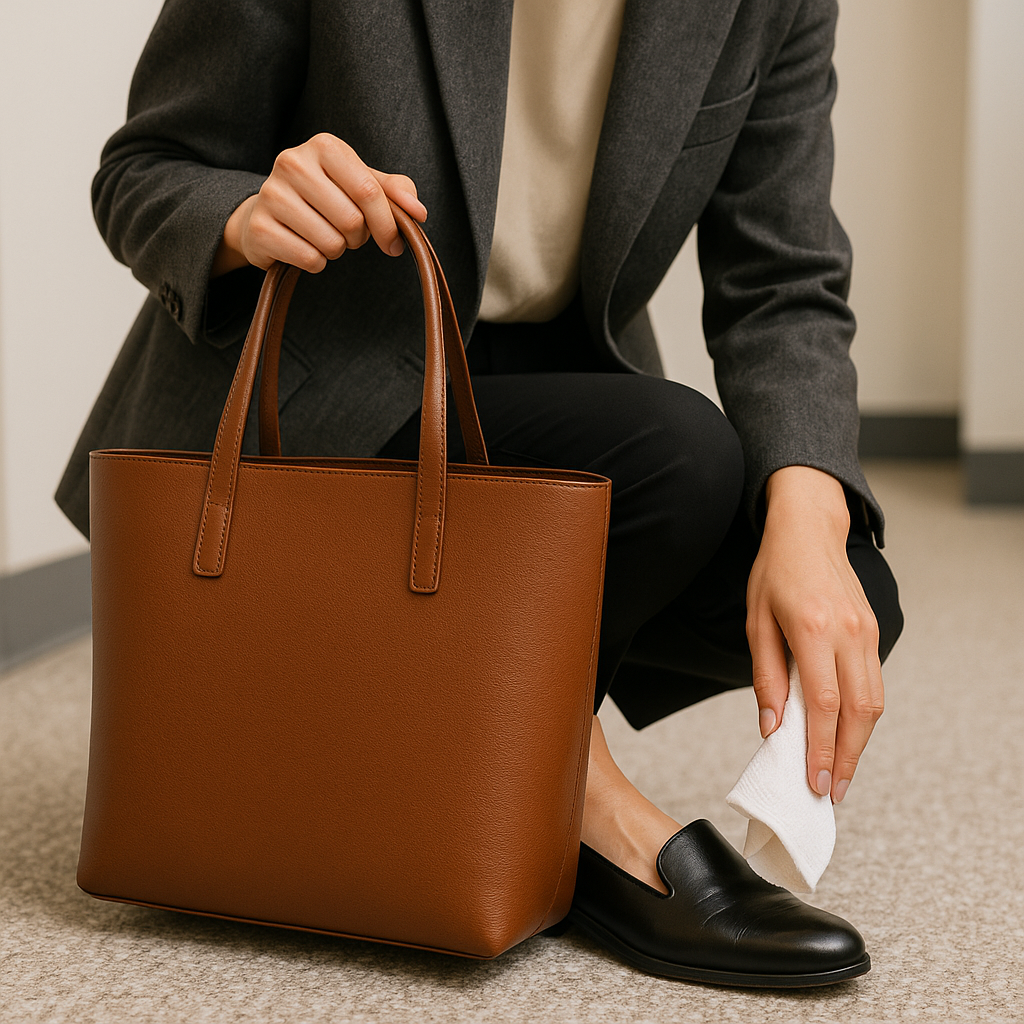
I can wear a thrifted blazer with a slightly rumpled collar and still look put together if my shoes and bag look cared for. I cannot fake it the other way around. Scuffed toes and a collapsing tote telegraph “I grabbed whatever” even if your outfit is technically correct.
When I thrift office shoes, I stay in the boring lane: leather loafers, simple block-heel pumps, or a sleek ankle boot if your office allows it. Brands I see a lot that hold up: Cole Haan, Sam Edelman, Naturalizer, Clarks, sometimes Franco Sarto. If you find something like Everlane or Madewell in good shape, grab it, but I do not count on it. The key is condition. I look at three spots like a ritual: the toe (deep scuffs are hard to hide), the heel cap (if it is worn down crooked, you will feel it with every step), and the inside lining (if it is peeling, it is going to shed onto your socks and you will hate your life by 2 p.m.). I do not pretend I can sanitiz my way out of a questionable interior, so I only buy pairs that look clean and structurally sound to begin with.
Once they are home, I do the low-effort refresh that makes them office-ready: wipe with a damp cloth, let them dry, then a small amount of neutral shoe cream or conditioner if the leather looks thirsty. For black shoes, I use black polish on just the toes and the heel edge, because that is what catches the overhead lights. Then I replace the insoles if they are removable. That is comfort, but it is also smell control, and yes, it matters when you are standing in someone else’s office.
For the bag: I hunt for one structured option that keeps its shape on the floor next to your chair. Think a simple leather tote with a firm base, or a satchel that stands up by itself. I flip it over in the aisle and check the corners. If the corners are shredded, you will baby it forever. If the straps have cracking near the attachment points, skip it. My tell is the slump tes: set it down empty. If it puddles, it will always look tired, even when you are not. Pair that one dependable bag with the rest of your outfit and you get the kind of consistency that makes people assume you shop somewhere expensive, even if your receipts say otherwise.