
Three secondhand tells I use: hardware weight, lining clues, and where to hunt for labels that got cut out.
Hardware tells first: zippers, snaps, and buckles
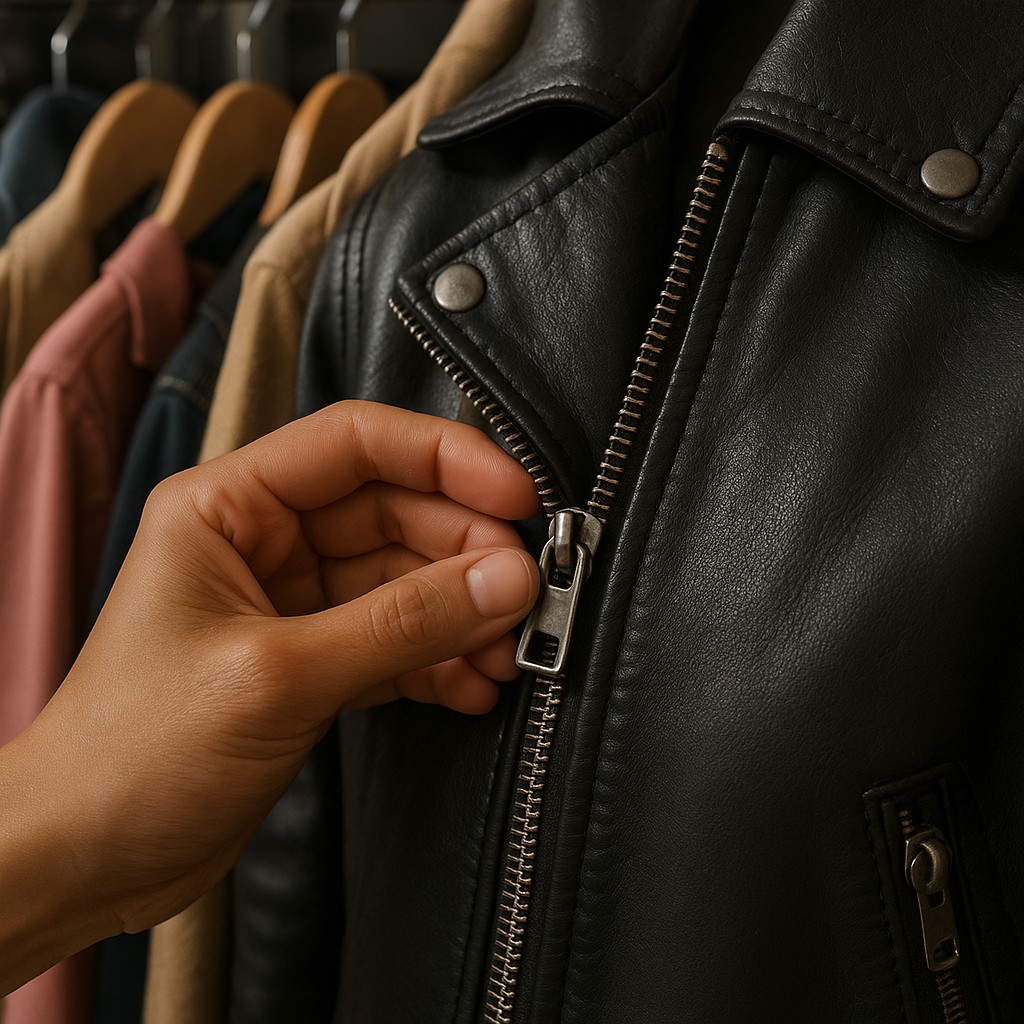
If I only have five minutes in a Goodwill aisle, I don’t even look at the brand tag first. I go straight for the hardware, because it’s the fastest way to separate a “designer-looking” dupe from something that will feel flimsy the second you wear it. The zipper is my opening move. A metal zipper with a little weight (often YKK, sometimes Riri on higher-end stuff, and occasionally an unmarked but obviously solid zipper) glides without that gritty stop-start thing. Cheap zippers snag at the tape, buckle outward, or feel like they’re chewing on the fabric. If I’m hunting for the vibe of a classic moto jacket, a skirt with an exposed back zip, or trousers with a clean side zip, that one detail can make the whole piece read expensive even if the label is mall-brand.
Then I check snaps and buttons like I’m trying to annoy the garment. I pop them open and closed a few times. If a snap spins in place or the prong looks like it barely caught the fabric, I put it back. A crisp snap that closes with a firm click is one of those sensory details you notice all day, even if no one else can name it. Buckles matter the same way. On belts, bag straps, and trench coat cuffs, I look for plated metal that isn’t already brassy at the corners. When I find a structured belt that has a heavy buckle and a strap that doesn’t look like painted cardboard at the edge, I can get that “designer accessory” finish for the price of a latte.
One more thrift-store move: I scan the checkout counter racks and the random purse shelf for stray replacement belts and straps. People donate the bag but keep the strap, or donate the strap without the bag. A good strap can upgrade a basic resale tote instantly, and you don’t need anyone’s logo for it to look intentional. If it has solid swivel clips and doesn’t squeak when you twist it, it’s coming home with me.
Lining, hems, and seam allowances: the inside story
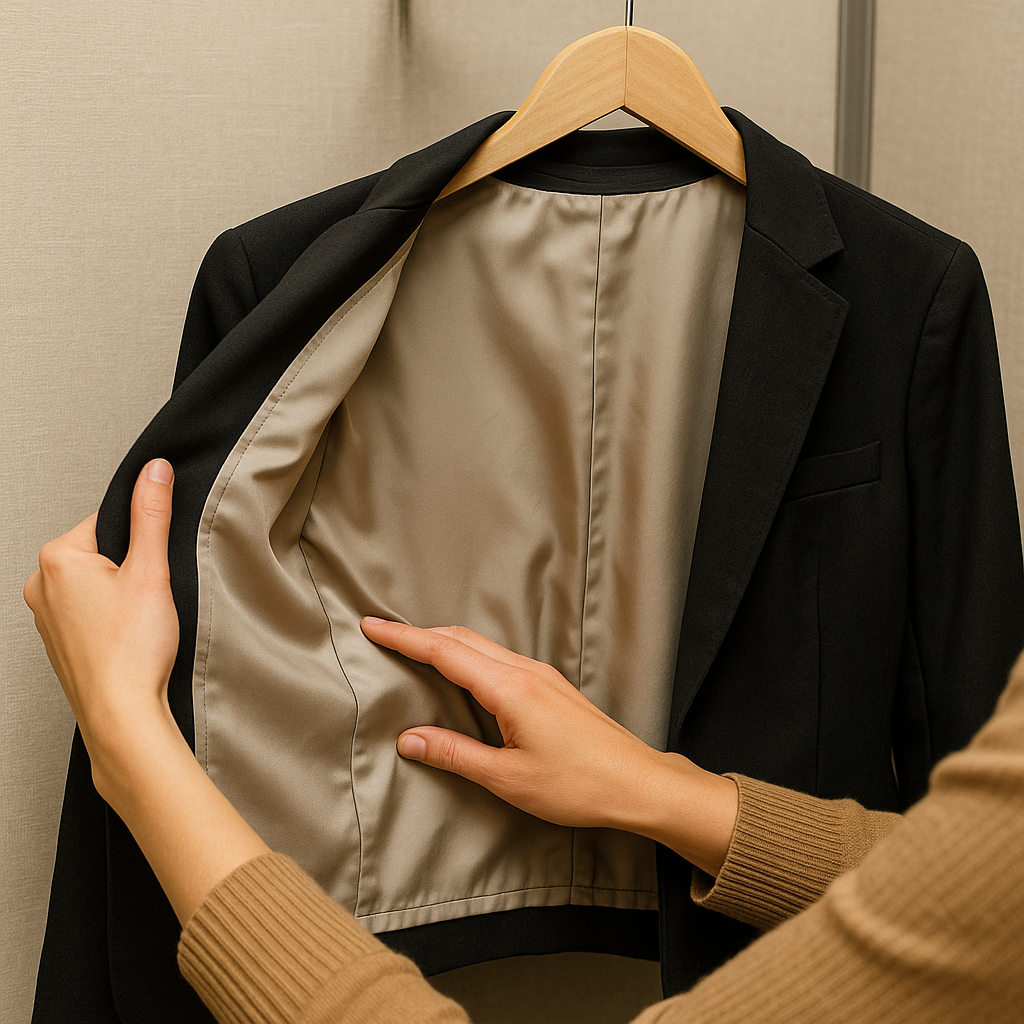
I don’t mind a dup label. I mind a dupe that gives itself away the second it moves. The fastest fix for that is learning what the inside should look like. In a thrift fitting room, I do the unglamorous thing: I turn the garment inside out and check three spots, in this order: lining, hem, and seam allowances.
Lining is the giveaway everyone ignores. A fully lined skirt or dress hangs differently, especially under harsh fluorescent lights where thin fabric shows every ripple. I run my hand between the shell and the lining. If the lining is attached cleanly at the waist and doesn’t twist, the outside tends to drape better. A slippery, whisper-thin lining that already looks static-y and wrinkled on the hanger will make the whole thing feel like costume nice For blazers, I look at the sleeve lining and the armhole seam. If it looks like a tidy finish and not a raw party, it usually wears well and survives cleaning without turning into a rumpled mess.
Hems are next. I flip the bottom edge and look for a wider hem allowance on skirts, trousers, and coats. More fabric at the hem gives weight and swing, and it’s one reason higher-end pieces look calm when you walk. Ultra-narrow hems can look fine on a hanger and then wave and flip when you’re out in the world. I also check whether the hem is even, which sounds basic until you’ve thrifted a great pair of pants that were home hemme in a hurry. You can spot that in two seconds by looking for wobble and puckering along the stitching line.
Finally, seam allowances. I’m not asking for couture, but if the garment has a tiny seam allowance that’s already fraying, it has no buffer left. A little extra seam allowance and neat finishing (serging, binding, or a cleanly stitched edge) means the piece has room to live. When I’m trying to get that designer-dupe effect, I’m chasing the quiet details that don’t shout. The outside can be a simple black sheath or a crisp button-down. If the inside is solid, it reads polished without trying so hard.
Where I look for cut labels and orpha luxury pieces
My favorite designer-dupe moments aren’t the obvious ones, like stumbling on a logo belt in a glass case. They’re the quiet orphan pieces: great materials, careful construction, and a brand tag that’s been cut out. Those pieces sit longer because resellers can’t slap a name on them, which is exactly why I hunt them.
First stop is the sections people speed-walk past. In larger thrift stores, that’s often the dresses in extended sizes, the petite rack, and the sleepwea section that secretly holds silk-adjacent slips and camisoles that layer like a styling trick, not pajamas. I also check the men’s dress shirts for crisp cotton and interesting weaves. A men’s shirt with a sturdy collar stand and good buttons can give you that polished, slightly oversized look without the weirdly thin fabric you get from trendy fast-fashion dupes.
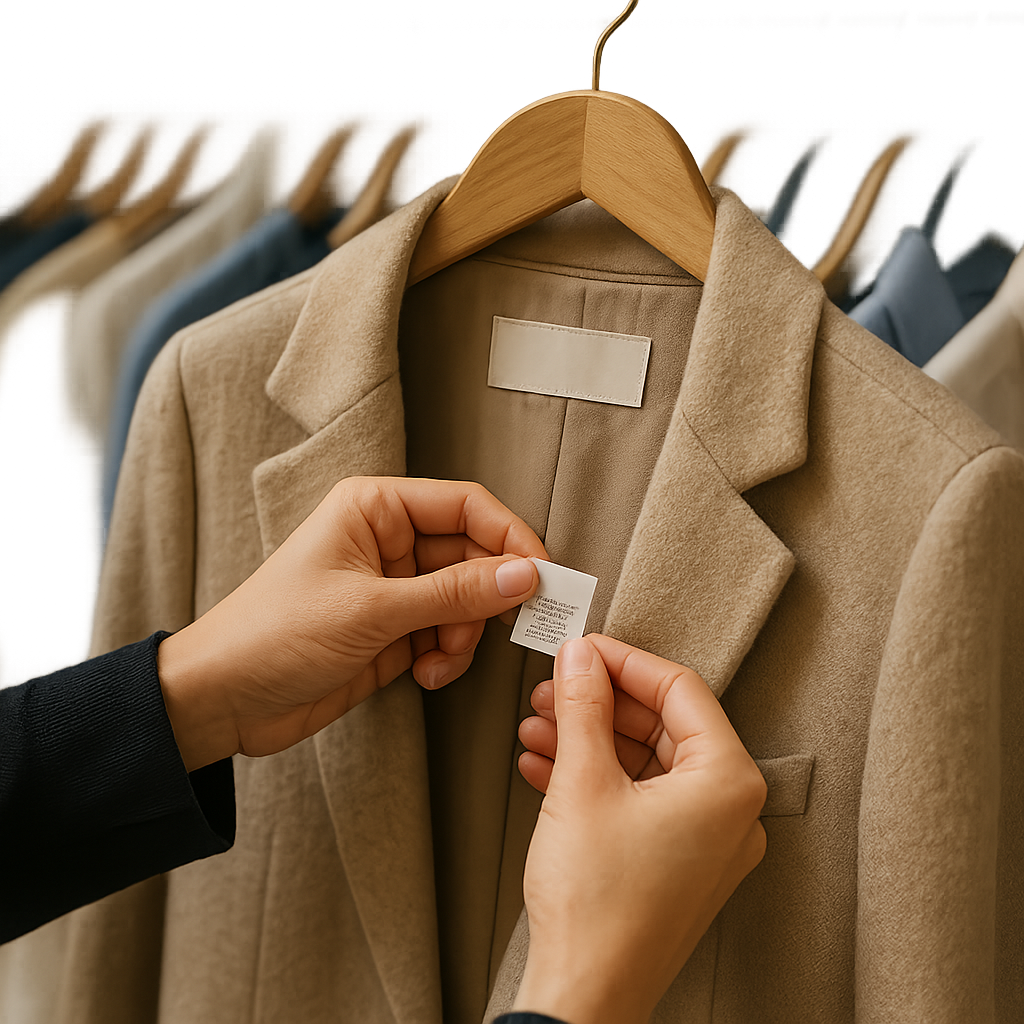
For cut labels, I look for the evidence that someone cared: a size stamp printed on the lining, a care label that lists the fiber content clearly, and consistent stitching. Then I check the inside for a small secondary tag in a side seam. People cut the main neck label because it’s itchy, but they leave the side seam label behind. That’s where you sometimes find the fiber content (wool, cashmere blend, silk) that tells you whether the designer loo will hold up after a season.
Two practical cautions, because resale still has limits. One: I don’t buy anything that smells strongly of mildew, even if it looks perfect. That smell can be stubborn, and you can’t guarantee you’ll ever get it out. Two: I don’t assume a fancy-looking tag means authenticity. If you’re paying up for something in a curated resale shop, ask about their authentication process and return policy, and keep your expectations sane. For me, the whole point of designer-dupe shopping is getting the silhouette and the feel, not winning an argument on the internet about what counts as real