
Three secondhand routines I use to keep kids dressed, stains handled, and outgrown pieces moving along without rebuying every season.
Make a hand-me-down map before you shop
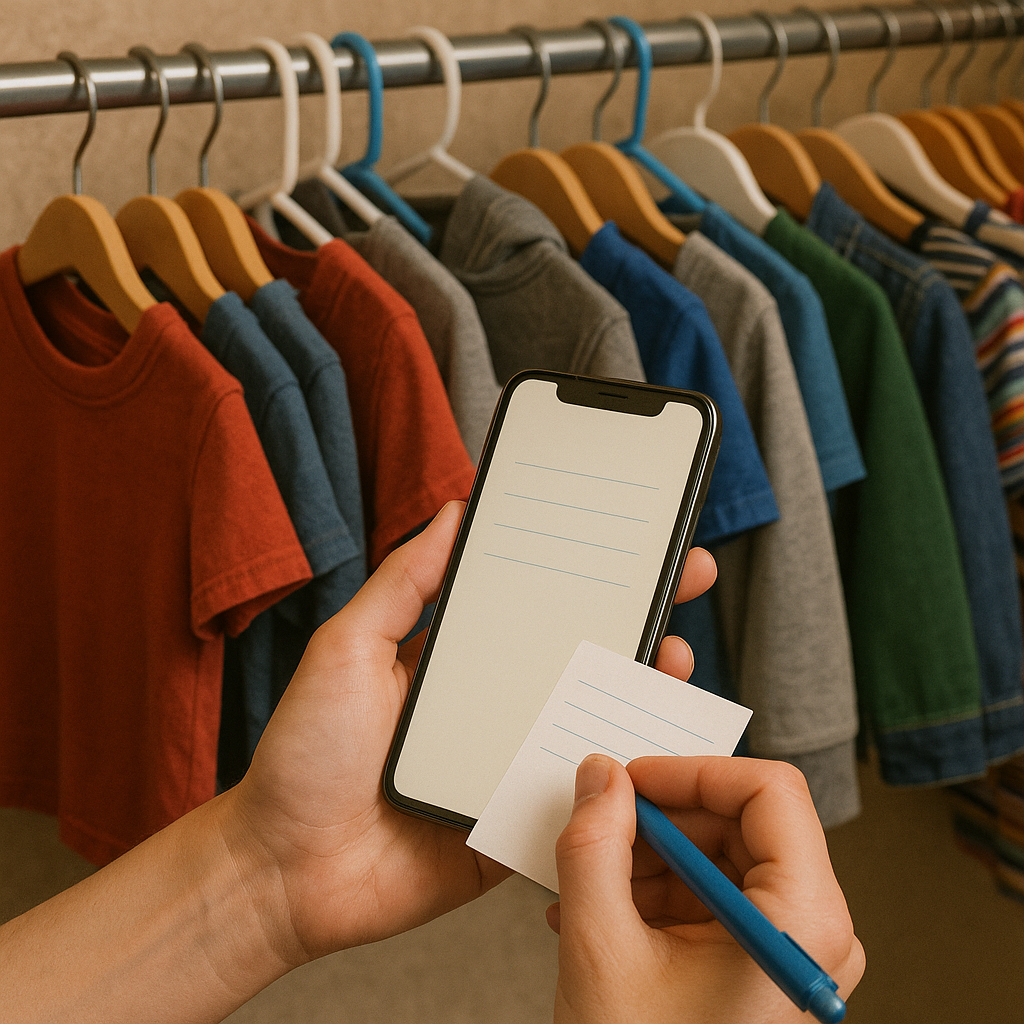
I used to walk into a thrift store with good intentions and walk out with a random pile: three graphic tees in the same size, pants with no adjustable waist, and exactly zero of the boring stuff we were missing (socks, leggings, one decent hoodie). What fixed it wasn’t willpower, it was a hand-me-down map. Before I go anywhere, I open my phone and write a three-line list for each kid: size now, size next, and the one brand that fits them predictably. For my tall kid, I look for Cat & Jack bottoms because the adjustable waistband buys me months. For my kid who hates scratchy necks, I stick to Hanna Andersson or primary.com tees if I see them because the cotton stays soft after a million washes. This sounds picky until you’re staring at a rack and trying to remember if 6X is the same as 7, or if that “slim” cut is going to end in tears in the dressing room.
Then I add a rule that keeps me from overbuying: I only bring home what I can rotate out in the same trip. If I’m hunting a winter coat, I bring last year’s coat in the trunk so I can drop it at the donation door on my way out. One in, one out. It’s not about being perfect, it’s about not turning the hallway closet into a textile landfill in slow motion.
In the store, I do a fast fabric and hardwar scan. Natural fibers aren’t magic, but they do matter for hand-me-down life. Cotton sweats, denim, and wool sweaters usually survive multiple kids. Super thin poly tees with that shiny feel tend to twist and pill before they even hit kid number two. I check knees, seat, and elbows first because that’s where the truth lives. I also look for name labels already inside. If another parent wrote Mil in Sharpie, I don’t see it as gross, I see it as proof the garment held up long enough to get labeled. Those are often the best pieces to adopt into your own little clothing ecosystem.
The stain triage I do in the aisle
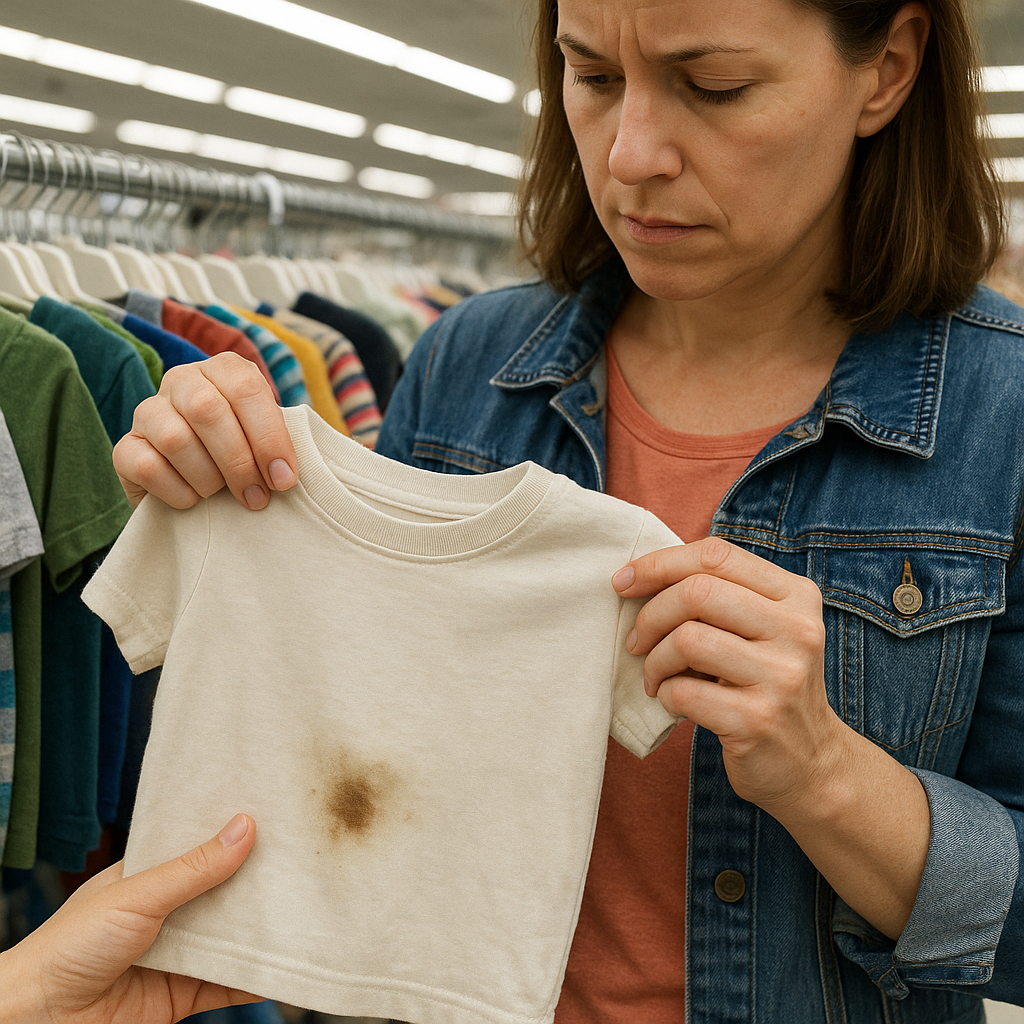
I don’t mind buying used kids’ clothes with a little history, but I’m not adopting mystery stains out of optimism. I do quick triage right there with the harshest overhead lighting the store can offer, because that lighting will reveal what your bedroom lamp politely hides.
Here’s how I decide, in about 20 seconds:
- Oily, dark spots near the collar or belly area: I usually pass. Grease can come out, but if it’s set into a thin jersey tee, you might launder it three times and still see the shadow. I don’t want a shirt that requires a chemistry project before a kid can spill spaghetti on it again.
- Rusty dots (often from old snaps or metal hangers): I pass unless it’s something special. Rust isn’t impossible, but it’s fussy and I’d rather keep my mental energy for the weeknight dinner situation.
- White salt rings or deodorant-y looking marks: On kids’ stuff it’s usually just dried detergent or hard water residue. I buy those if the fabric feels strong and the price is right.
- Paint or marker: Depends. If it’s clearly on-purpose (splatter art shirt, yes), I’m in. If it’s random marker on a knee, I leave it.
The other thing I watch for is laundering tells If a sweatshirt feels stiff like cardboard and smells heavily perfumed, it might just be scented detergent, but it can also mean someone tried to mask a smell. I’m not claiming I can diagnose that with my nose. I just decide whether I’m willing to wash it twice and still maybe not like it. For anything that would be annoying to clean (puffy coats, lined jackets), I only buy if it already smells neutral.
When I do bring something home with a manageable stain, I keep it simple and repeatable: cold water rinse first, then a basic enzyme stain remover like Zout or Shout on the spot, then wash. If it’s white cotton and the stain is still there, I let it dry in the shade and look again before it ever touches the dryer. The dryer is the point of no return, and I’ve learned that lesson the loud way. This is also where secondhand shopping gets quietly eco-friendly: you rescue a perfectly good garment from the eh, toss i pile, and you don’t need a new one shipped to your door because a blueberry betrayed you at 8:12 a.m.
The Saturday swap bin that keeps clothes moving
If you only shop secondhand on the way in (buying), and never pass things along on the way out, the whole system collapses. You end up with bins of clothes you meant to donate sometim and you buy replacements because you can’t find what you already own. My fix is a Saturday swap bin with one rule: it has to leave the house once a month.
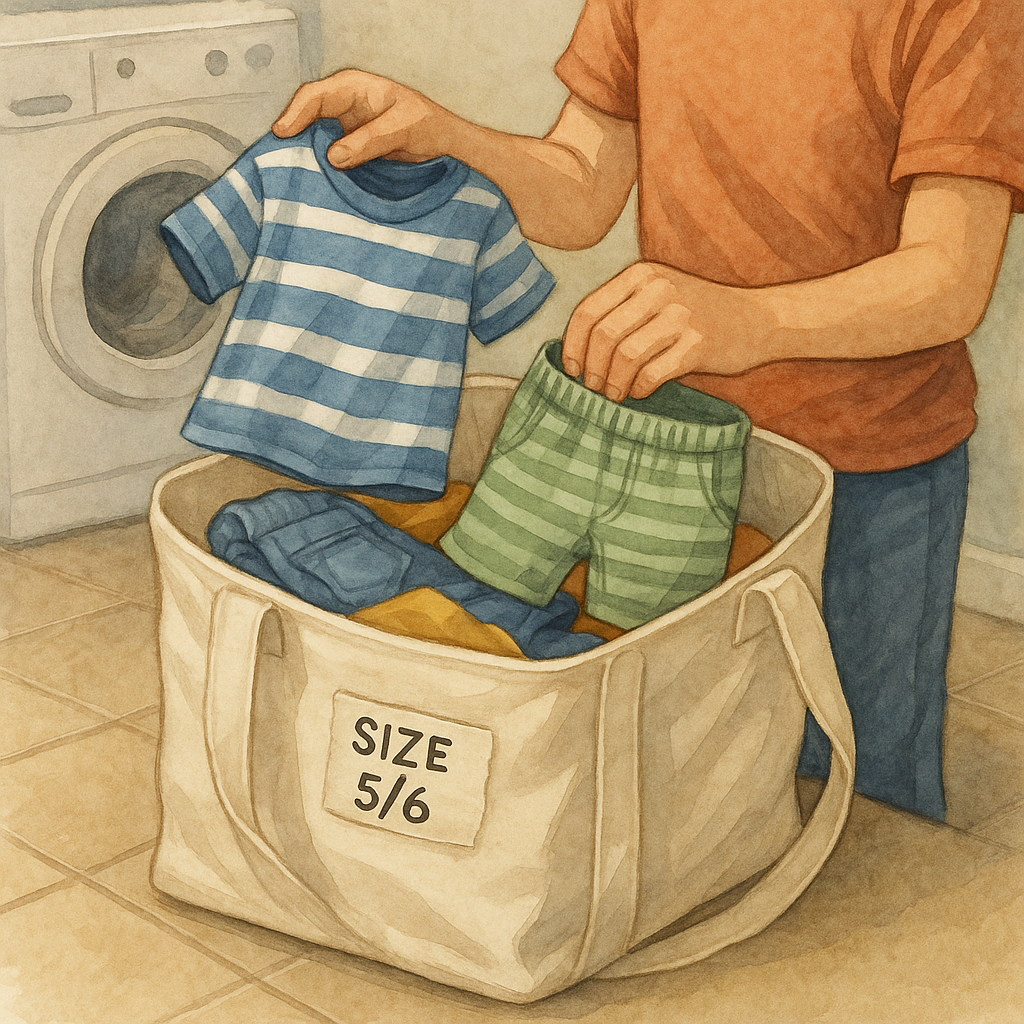
I keep a sturdy tote in the laundry area labeled by size with a piece of masking tape, and I don’t overthink it. When pants suddenly turn into capris or a tee shrinks into a crop top (why does it happen overnight?), it goes straight into the bin after it’s clean. Not folded. Not photographed. Just contained. At the end of the month, I pick one route and do it fast: drop at the donation door, bring it to a kids’ consignment shop, or list it in a local Buy Nothing group. Buy Nothing is my favorite for speed because you can post “Size 5/6 lot, porch pickup” and it’s gone in hours. People are thrilled, and you’re not stuck playing shipping department.
There’s a trick to keeping it from becoming a trash transfer. I only put in pieces I’d be happy to receive: no blown-out knees, no missing zipper pulls, no shirts with a stretched-out neck that looks like it lived a hard life on a classroom hook. If something isn’t good enough to pass along, it either becomes a paint shirt or it goes to textile recycling if your area has it. I also keep a small bag inside the tote for the good part: a lost hoodie drawstring, extra buttons, those little spare elastics that sometimes come with kids’ jeans. When I find a matching piece later, it’s weirdly satisfying.
This is where the eco-conscious part becomes more than a vibe. You’re extending the useful life of cotton, denim, and those surprisingly durable kid brands that show up secondhand all the time. You’re also keeping yourself from panic-buying the night before picture day because you can’t find a presentable shirt in the correct size. The best part is how quickly kids adapt. Once they see clothes cycle in and out, they stop acting like every shirt is a permanent possession and start treating it like gear: wear it hard, pass it on, repeat.