
One index card, three racks, and a no-regrets color test that keeps your vintage capsule tight and wearable.
The index-card palette test (do it under the fluorescents)
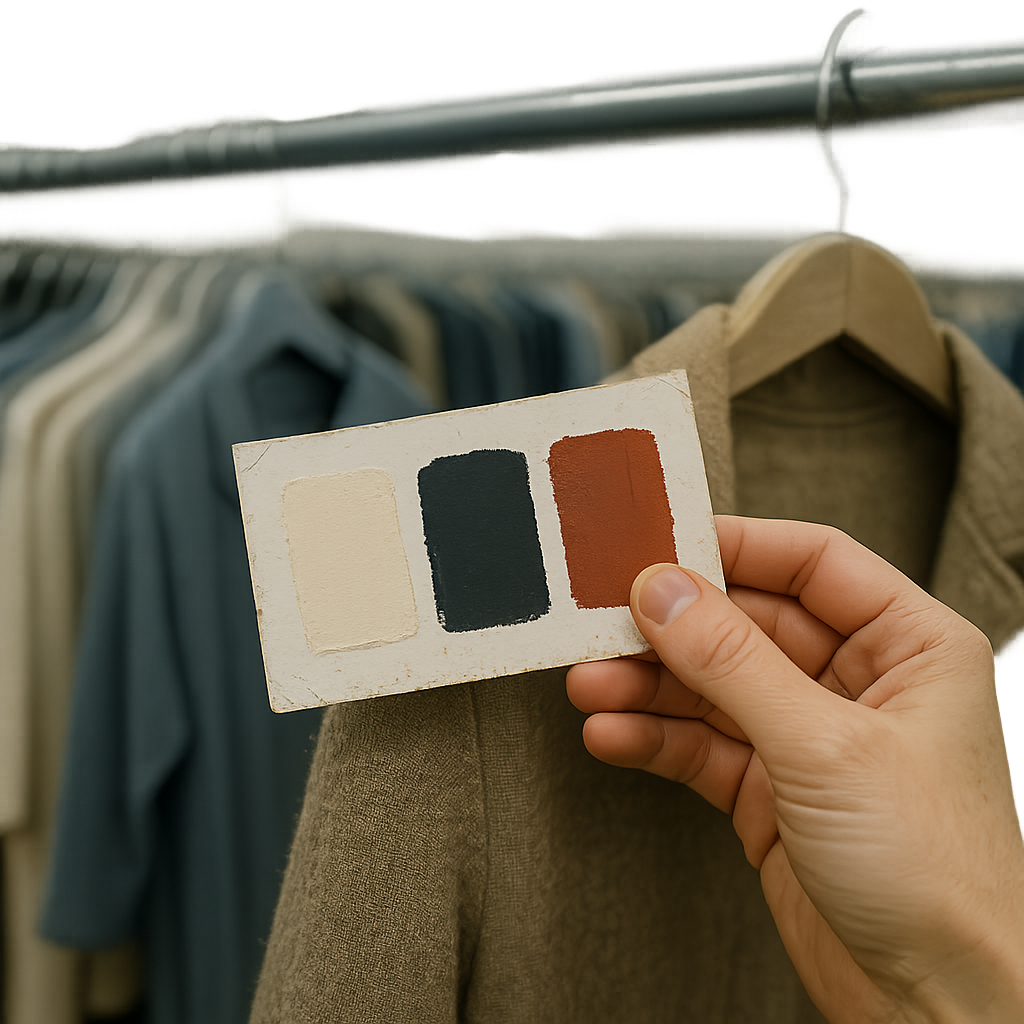
I keep a beat-up 3×5 index card in my bag with three swatches painted on it: my “cream” (not bright white), my “ink” (not true black), and my one accent color that makes everything look intentional. Mine is a rusty brick red, but pick whatever you can stand to wear weekly. This is the fastest way I know to curate a vintage capsule while you are standing under thrift-store fluorescents, where every beige looks like it belongs until you get it home and it turns green next to your sweaters.
Here’s how I use it in the aisle. I hold the card right up to the fabric, not six inches away. If the garment’s whit makes my cream swatch look dirty, it’s going to fight every other light neutral I own. If the garment’s blac makes my ink swatch look washed out, it usually reads like that dusty off-black that can be cute but only if you commit to it across the capsule. And the accent swatch is the whole point: if the item looks better with my accent than without it, it’s likely to play well with the few statement pieces I’m keeping on purpose.
This isn’t about matching perfectly. It’s about avoiding the weird in-between shades that make a closet feel huge but never quite work together. I still check the tag (fiber matters), and I still look for obvious fade at the shoulders, but the card decides whether it even gets to the fitting room. If you’re building a capsule, you need quick veto power, and an index card is blunt in the nicest way.
Build your capsule from a fabric family not an era
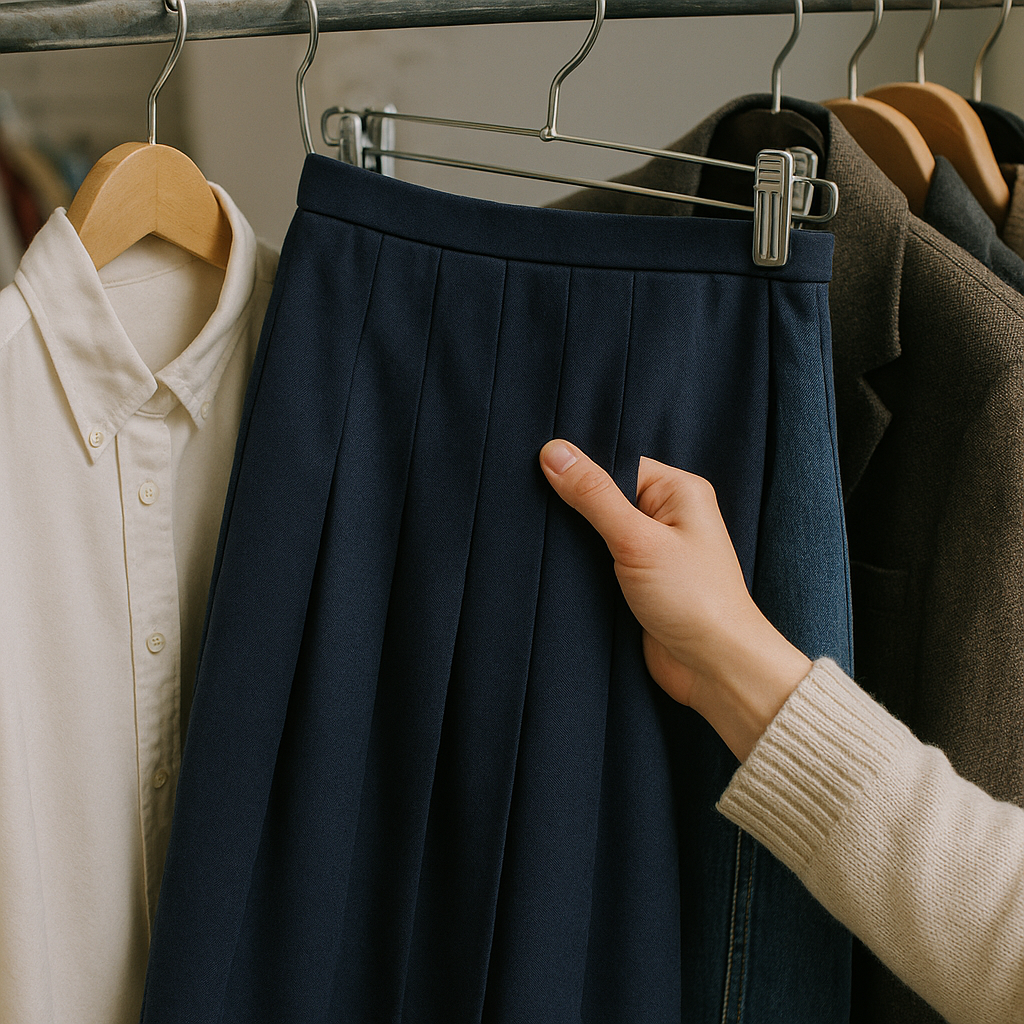
I used to hunt vintage by decade, and it made my closet look like a themed party. What finally clicked was building around a fabric family instead. When the textures and weights live in the same neighborhood, a 1970s skirt and a 1990s blazer stop arguing. In a secondhand shop, you can feel this faster than you can research labels, and it keeps you from buying rar pieces that only work with one outfit.
My default family for a wearable capsule is: crisp cottons (oxford, poplin, broadcloth), sturdy wovens (denim, twill), and one soft layer that behaves (merino, lambswool, or a not-too-fuzzy wool blend). In the racks, I do two quick checks. First, the light test: hold the fabric up toward a window or the brightest aisle. If your hand silhouette is loud through what is supposed to be trousers or a skirt, that piece is going to cling, show seams, and look tired fast unless it’s intentionally sheer. Second, the pinch-and-release: scrunch a section in your fist for two seconds and let go. Linen can wrinkle and still be charming, but if it stays in a tight crumple like a used napkin, you’ll either avoid wearing it or you’ll live with a steamer in your life.
This is also where I get picky about synthetics without being precious. Vintage poly can be indestructible, but it often has that squeak and shine under store lighting. If I’m keeping a small wardrobe, I want most items to be comfortable enough that I reach for them on a random Tuesday. A capsule dies when half of it is “for when I’m in the mood.” Pick the fabrics that make you forget you’re wearing them, then let the era be a bonus detail, not the whole premise.
The one-hanger outfit audit before you hit checkout
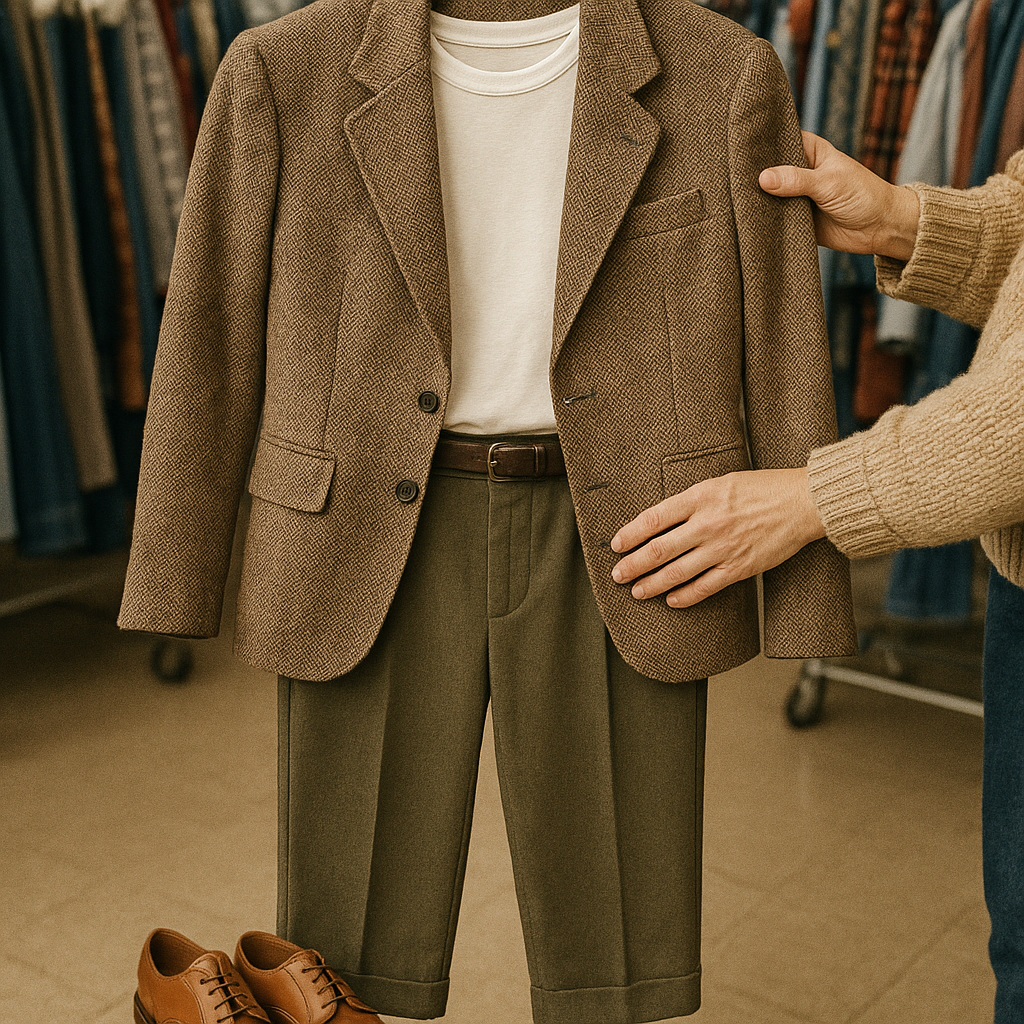
Right before I head to the register, I do a one-hanger audit that feels a little ridiculous and saves me from the “I swear I’ll style this” pile. I grab a sturdy hanger (the thrift store’s plastic ones are fine) and build one complete outfit on it from what I’m about to buy. Top, bottom, and a layer if I’m buying one. Shoes don’t go on the hanger, obviously, but I picture the pair I actually wear, not the fantasy pair.
The rule: if I have to explain the outfit to myself, it doesn’t count. If the only way the blouse works is tucked exactly into one specific skirt with a belt I might not be able to find later, that blouse is not capsule material. If the jacket only looks right over a dressy dress, it’s a special occasion piece, not a building block. And if the colors only kind o go together in the store mirror, they will go even less together in daylight.
What I look for is boring compatibility. A vintage blazer that sits clean over a cotton tee without pulling at the back armhole. A skirt that doesn’t need constant adjusting at the waistband when I take a full breath. A pair of trousers that still looks good when I put my hands in the pockets and walk around the fitting room twice. (If the fabric immediately bags at the knees after that little lap, it will only get worse.)
This audit also keeps me honest about duplicates. If I’m buying my third perfec camel sweater, I make it prove it can replace one I already own, not just join it. In a curated wardrobe, every hanger is competing for wear time. Let them compete before you pay.